Buying a home in Savannah can feel exciting right up until you realize the mortgage is only part of the picture. If you are planning a move, upsizing, downsizing, or relocating from out of town, it helps to know what your monthly and annual housing costs may look like beyond principal and interest. This guide walks you through the ongoing costs Savannah buyers should expect so you can budget with more confidence and fewer surprises. Let’s dive in.
Why Savannah costs look different
Savannah has a few local factors that can make ongoing homeownership costs more noticeable than in some inland markets. The area’s climate is hot, humid, and wet, which often means higher cooling use, more moisture control, and regular upkeep around gutters, HVAC systems, and pest prevention.
According to NOAA climate normals for Savannah International Airport, average highs reach 92.3°F in July and 90.8°F in August, with 48.12 inches of annual precipitation. In practical terms, that means your budget may need more room for air conditioning, humidity management, and water-related maintenance than you would expect in a drier climate.
Start with the full housing payment
A mortgage payment is only one part of your total housing cost. Freddie Mac explains that broader homeownership costs can include property taxes, homeowners insurance, HOA fees, utilities, maintenance, and repairs.
That matters because some costs are paid monthly, some are billed every other month, and some show up only once or twice a year. Looking at the full picture before you buy can help you choose a home that fits your real budget, not just your loan approval amount.
Budget for Savannah utilities
City utilities are not always monthly
One detail that catches some buyers off guard is that the City of Savannah bills water, sewer, trash, and recycling on a bi-monthly cycle. The city’s utility billing guide and billing schedule and rates show that these costs do not always arrive in a standard monthly pattern.
For 2026, the city lists an inside-city 5/8-inch water meter readiness-to-serve charge of $11.06 bi-monthly, water usage at $1.46 per unit up to 15 units, an $8.80 bi-monthly residential sewer base charge, and a $42.81 monthly residential refuse fee. That means fixed city utility charges alone are about $52.74 per month before water usage and before electricity.
If the home is outside city limits, rates can be higher. It is also worth noting that the city projected incremental water and sewer rate increases from 2026 through 2030, with an average annual increase of 7.18 percent for the median inside-city customer.
Electricity often rises in summer
In Savannah, electricity is often one of the largest utility costs. Georgia Power’s Residential Service plan uses seasonal pricing, with higher summer pricing from June through September and lower winter pricing from October through May.
That seasonal structure matters in a market with long, hot summers. If you are comparing homes, features like older HVAC systems, large sun-exposed windows, poor insulation, or high ceilings may affect your cooling costs over time.
Insurance deserves close attention
Homeowners insurance may not cover everything
Insurance is one of the biggest areas where buyers should slow down and ask detailed questions. The Georgia Office of Insurance and Safety Fire Commissioner advises homeowners to review policies for wind, fallen trees, temporary living expenses, and deductibles.
The same guidance also notes that flood coverage is typically not included in a standard homeowners policy, and some policies may include separate hurricane or wind deductibles. In a coastal market like Savannah, this is not a small detail. It can have a real impact on your annual and out-of-pocket costs.
Flood insurance is separate
FEMA states that flood insurance is a separate policy, and homes in high-risk flood areas with government-backed mortgages are required to carry it. The City of Savannah’s flood protection information adds that FEMA flood-hazard maps are used to determine flood insurance rates and requirements across coastal Chatham County and the city.
Savannah also notes that this low-lying coastal region is at risk from heavy rainfall and storm surge, and that pricing can change under FEMA Risk Rating 2.0. If a home is near water, marsh, or low-lying streets, flood review should be part of your home search and your monthly budget planning.
Timing matters before hurricane season
Georgia’s hurricane season runs from June 1 through November 30. State insurance guidance recommends reviewing your coverage before storms are already in the forecast, and it also notes that flood policies can have a 30-day waiting period.
If you are moving to Savannah from another region, this is an especially important part of your planning. Waiting until late in the process can limit your options or delay when coverage begins.
HOA dues can change the math
Not every Savannah-area property has HOA dues, but many condos, townhomes, and planned developments do. Fannie Mae explains that HOA fees vary widely based on location, amenities, property value, and the age and condition of the community.
Those dues may support reserve funds, ongoing maintenance, or special assessments tied to large repairs or unexpected events. Freddie Mac notes that HOA fees may also cover services like trash removal, water and sewage, lawn care, pest control, and common-area maintenance.
That means a home with HOA dues is not always more expensive in practice than one without them. The key is understanding what the fee actually covers, how often it is billed, and whether there is any history of special assessments.
Property taxes are ongoing, not one-time
It is easy to focus on closing costs and forget that property taxes continue year after year. Chatham County posts annual property tax rates and notes that local governments adopt rates at different times during the year.
Because rates can vary by jurisdiction, buyers should verify the current tax-year rate for the specific municipality before assuming a prior bill will stay the same. This is especially important if you are comparing properties in different parts of the Savannah and Chatham County area.
Maintenance is part of coastal ownership
Moisture control matters in Savannah
Routine maintenance is not just about appearances. In Savannah’s climate, it plays a major role in protecting your home over time. UGA Extension’s Healthy Housing guidance recommends keeping the home dry, clean, ventilated, pest-free, and maintained.
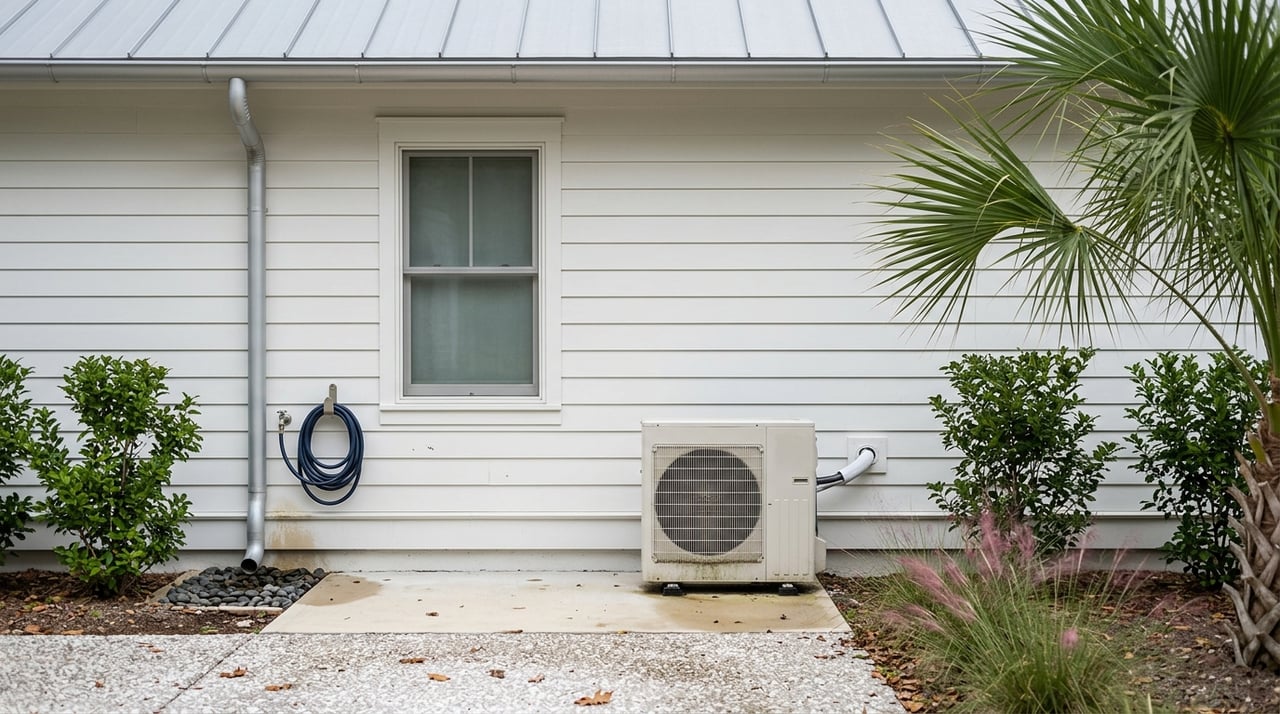
That includes tasks like fixing leaks, keeping indoor humidity below 60 percent, cleaning gutters and downspouts, changing HVAC filters, and inspecting heating and cooling systems. UGA also makes a simple but important point: mold problems are moisture problems.
Pest and termite service may be recurring
Ongoing pest control is another cost many buyers should plan for in Georgia. The state’s Structural Pest Consumer Information explains that contracts are required for structural pest control services such as termite treatments and general pest control services, including rodent control.
For many homeowners, that makes termite monitoring and regular pest service a realistic line item in the annual home budget. It is not always a large monthly number, but it is a recurring ownership cost that is easy to overlook at the start.
A simple Savannah cost checklist
If you want a practical way to think about ongoing costs, start with this list:
- Electricity, especially higher summer cooling costs
- Water, sewer, trash, and recycling billed on the city’s bi-monthly cycle
- HOA or condo dues, if the property is in an association
- Property taxes for the specific municipality and tax year
- Homeowners insurance premiums, deductibles, and wind-related details
- Flood insurance, if the property location or lender requires it
- Pest and termite contracts or inspections
- Routine upkeep such as HVAC service, gutter cleaning, caulk, paint, and moisture control
- Larger future replacements like roofs, water heaters, and HVAC systems
- Possible HOA special assessments in condo or planned communities
Why this matters before you buy
Knowing these costs ahead of time can help you make a stronger decision about price range, property type, and neighborhood fit. A home with a lower purchase price but higher insurance, utility, or maintenance needs may not feel as affordable month to month as it first appears.
This is also where local guidance matters. When you understand how Savannah’s climate, utility structure, flood exposure, and community fees affect real ownership costs, you can compare homes more accurately and move forward with less stress.
If you are planning a move in Savannah or the surrounding coastal market, Homes by TLC - Taylor Lomprez can help you look beyond the mortgage and evaluate the full cost of ownership with a local, tailored approach.
FAQs
What ongoing home costs should Savannah buyers expect beyond the mortgage?
- Savannah buyers should budget for utilities, property taxes, homeowners insurance, flood insurance if applicable, HOA dues when required, routine maintenance, pest control, and larger repairs over time.
Are Savannah water and trash bills paid monthly?
- Not always. The City of Savannah bills water, sewer, trash, and recycling on a bi-monthly cycle, even though some parts of the charges are based on monthly rates.
Is flood insurance included in standard homeowners insurance in Savannah?
- No. Flood insurance is generally a separate policy, and it may be required for homes in high-risk flood areas with government-backed mortgages.
Why are summer home costs often higher in Savannah?
- Savannah’s hot, humid weather can drive up air-conditioning use, and Georgia Power’s residential pricing is seasonal with higher summer pricing from June through September.
Do all homes in Savannah have HOA dues?
- No. HOA dues apply only to properties in HOA-governed or condo-style communities, not to every home.
What maintenance items matter most for Savannah homeowners?
- Key recurring items include HVAC filter changes and service, gutter and downspout cleaning, humidity control, leak repair, and pest or termite protection.